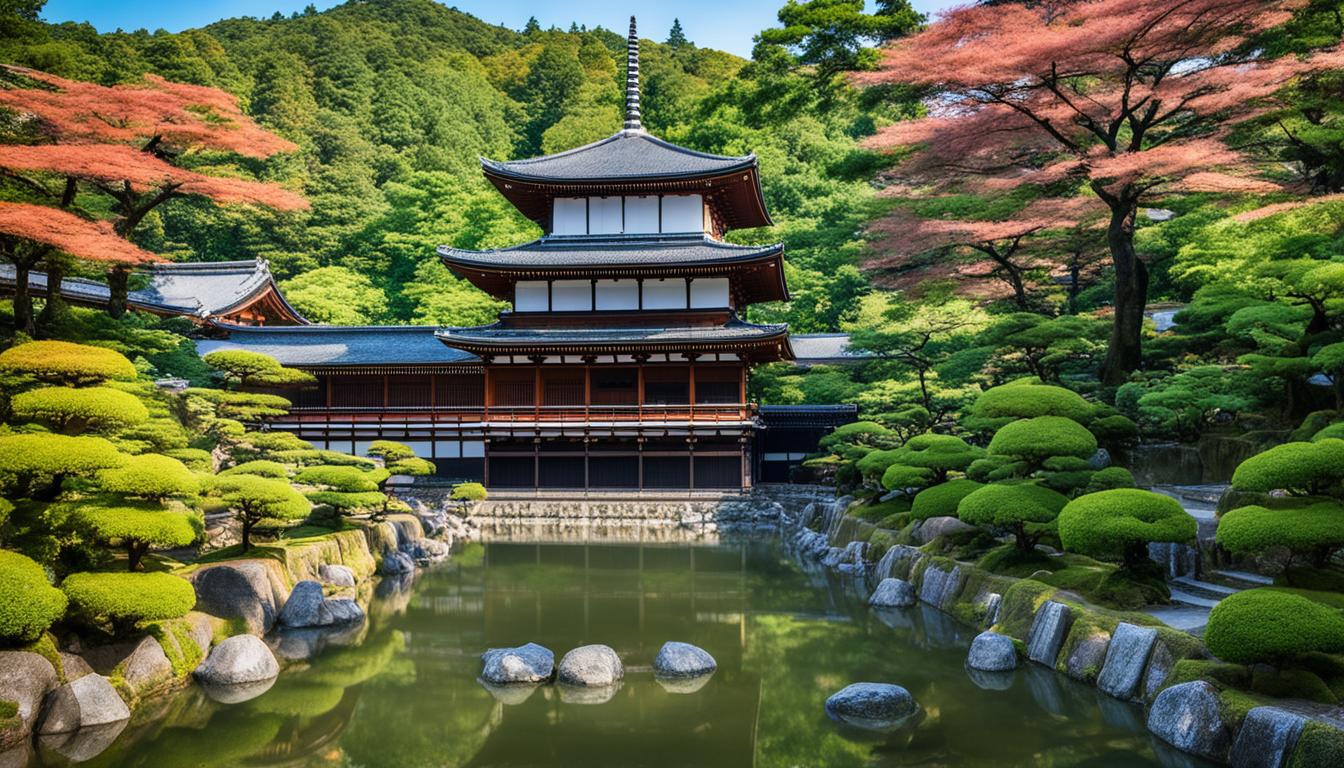
Kyoto was once Japan’s imperial capital. It’s a city that draws people in with its deep history, beautiful buildings, and spiritual traditions. This article will guide you through Kyoto’s cultural wonders. We’ll focus on the amazing temples that have been important for centuries.
In the heart of Japan, Kyoto has a rich legacy. Its temples have beautiful architecture and peaceful gardens. They have inspired wonder and respect for many years. From old rituals to the calm Zen philosophy, Kyoto lets you dive into the cultural treasures that make Japan famous.
Let’s explore Kyoto’s temples together. Here, the old and new blend perfectly. We invite you to see the spiritual legacy and architectural wonders. These have touched the hearts and minds of people worldwide.
Kyoto’s Enduring Spiritual Legacy
Kyoto’s spiritual heritage is a big part of its culture. It has many Buddhist temples and Shinto shrines that have lasted for centuries. These places show Japan’s long-standing traditions. They highlight the skill and creativity of their makers over the years.
Centuries of Architectural Marvels
Kyoto is full of historic temples and shrines that have seen many years. Places like the famous Kinkaku-ji (Golden Pavilion) and the peaceful Ginkaku-ji (Silver Pavilion) show the city’s rich past. They let visitors see the detailed work and careful upkeep of these sacred places.
Embracing Zen Tranquility
In the busy city of Kyoto, there are quiet spots for peace. These are often in the gardens of Buddhist temples. They offer a chance to connect with Japanese spirituality. By learning about Zen, visitors can understand Japan’s deep culture and the value of living in harmony with nature.
Cultural Wonders: Discovering Kinkaku-ji
In the heart of Kyoto, Kinkaku-ji, or the Golden Pavilion, is a stunning Zen temple. It’s a masterpiece of Zen architecture and a symbol of Japan’s cultural heritage. Visitors from all over the world come to see its beauty and peacefulness.
The temple is well-kept and shows off Japanese architecture at its best. Its three-story structure combines Shinden, Samurai, and Zen styles beautifully. The top floor, covered in gold leaf, shines in the sun, making it look magical.

The gardens around Kinkaku-ji are just as beautiful. They have peaceful ponds, neat landscapes, and Zen gardens. Walking on the paths, you feel the perfect mix of nature and art that Kyoto is known for.
If you love Japanese architecture, Zen Buddhism, or just want a peaceful place, Kinkaku-ji is a must-see in Kyoto. This temple, with its golden beauty and calm setting, shows the city’s lasting beauty and cultural importance.
Ginkaku-ji: The Silver Pavilion’s Serene Beauty
In the heart of Kyoto, Ginkaku-ji, or the Silver Pavilion, is a stunning Zen temple. It shows how nature and architecture can come together beautifully. The temple’s silver-toned facade is a symbol of Japanese landscape design’s lasting beauty.
Moss Gardens and Ethereal Landscapes
Around the Silver Pavilion, there are peaceful moss gardens. These gardens let visitors enjoy Kyoto’s natural beauty. The moss covers the ground, making a calm place for thinking and reflecting.
Walking through, you’ll see the beautiful patterns of the gardens. They mix the natural and the man-made perfectly. The Ginkaku-ji gardens are a work of art, showing Zen Buddhism’s beauty in rocks, water, and plants.
The gentle slopes and carefully placed stones make you feel at peace. The ponds add to the calmness, taking you to a place of quiet thought.
If you love Zen gardens or just want peace, Ginkaku-ji is a place you must see. The moss gardens and the Silver Pavilion’s beauty will show you the lasting appeal of this sacred spot.
Kiyomizu-dera: Perched Atop Sacred Heights
Kiyomizu-dera sits high on the Otowa Mountain, drawing in visitors with its beauty. It’s a top spot for those who love Japanese architecture and amazing views. This sacred place is known for its wooden wonders, inviting you to dive deep into Kyoto’s spiritual world.

When you get closer, the temple’s big wooden veranda stretches out, showing off the city below. This famous spot seems to float in mid-air, thanks to its huge wooden pillars. It’s a sight that fills you with wonder. The fine details and design show the hard work and skill of the builders.
Inside, the sound of the Otowa Waterfall welcomes you. Here, people come to drink the clear water to wish for good luck and a long life. Kiyomizu-dera is a place of deep spiritual meaning for many.
The view from the veranda is stunning, showing off Kyoto’s green beauty. Looking out, you’ll feel a new respect for the temple’s high spot and its importance in Kyoto’s culture.
Kiyomizu-dera is a symbol of Japan’s architectural beauty and its deep connection with nature. It’s a place that touches the heart, whether it’s your first visit or you’ve been many times before.
Fushimi Inari-Taisha: A Vibrant Journey Through Torii Gates
In the heart of Kyoto, Fushimi Inari-Taisha Shinto shrine is a key spot for exploring Japan’s culture. It’s famous for its bright red torii gates. These gates lead visitors through Mount Inari’s trails, showing a unique view of Kyoto’s sacred places.
Exploring the Mountain’s Winding Trails
Walking up Mount Inari, you’ll see a sea of red torii gates. These gates symbolize the link between the world of the living and the spiritual realm. They guide you on a peaceful walk through green forests and shrines.
The shrine shows the lasting impact of Shinto, Japan’s ancient faith. It has many small shrines and altars for the Inari god, who watches over foxes, fertility, and business. Hikers can stop to pray, look at the detailed architecture, and enjoy the peaceful vibe of the mountain.
On the trails, you’ll see beautiful views of Kyoto and the green mountains. The calm nature and the bright torii gates make for a memorable Japanese experience.
Nijo Castle: A Glimpse into Samurai Heritage
Nestled in Kyoto’s heart, Nijo Castle is a symbol of Japan’s feudal past. It’s a UNESCO World Heritage Site that shows the samurai heritage of this historic city. The castle’s design and the famous “nightingale floors” take guests back to Kyoto’s feudal times.
Architectural Ingenuity and Nightingale Floors
Nijo Castle’s design is truly amazing. The “nightingale floors” squeaked when stepped on, alerting guards of intruders. This clever design was both practical and added to the castle’s charm. Visitors can picture samurai warriors guarding the castle, ready to protect their lord.
The castle’s architecture takes you back to the feudal era. With its detailed woodwork and beautiful gardens, it’s like stepping into the past. The design invites visitors to explore Kyoto’s cultural heritage.
Nijo Castle is a key historical site in Kyoto. Its architecture and samurai legacy offer a peek into feudal Japan. It lets visitors feel connected to the city’s rich history.
Arashiyama’s Bamboo Groves and Scenic Delights
Step away from Kyoto’s famous temples and explore Arashiyama’s peaceful beauty. This area is known for its green bamboo forests and beautiful nature scenes. Walk along Arashiyama’s paths, enjoy the calm, and see the natural beauty that draws people from everywhere.
The bamboo groves in Arashiyama are a key part of Kyoto’s beauty. Tall bamboo moves softly in the wind, making a peaceful place away from the city. Walking here, you’ll hear bamboo leaves rustle and see the sunlight filter through, creating a magical feel.
Arashiyama has more than just bamboo. It has green forests, quiet rivers, and beautiful hills. These make a perfect setting for outdoor fun or just relaxing. You can hike, bike, or just enjoy the calm of nature here.
For a closer look at Kyoto’s nature, Arashiyama has lots to offer. You can go on nature walks, try traditional tea ceremonies, or find a quiet spot for meditation. Arashiyama’s calm beauty and outdoor activities make it a special place in Kyoto.
Kyoto’s Temple Traditions: Immersing in Rituals and Ceremonies
Explore Kyoto’s deep spiritual world by diving into its temple traditions. You can join in on peaceful meditation or see the colorful festivals that celebrate Japan’s heritage. These traditions have shaped Kyoto for centuries.
Celebrating Cultural Festivals
Kyoto’s temples shine during the city’s cultural festivals. The Gion Matsuri festival is a highlight, lasting a month and showing off Kyoto’s history and traditions. It ends with a big parade of floats, letting you see Kyoto’s cultural past.
Another big event is the Daimonji Gozan Okuribi festival. It lights up the mountains with huge bonfires, showing the community’s spiritual bond.
But it’s not just the big festivals. Kyoto’s temples have many smaller rituals and ceremonies all year. Events like the Setsubun bean-throwing and the Toka Ebisu festival let visitors feel the deep spiritual meaning in Kyoto.