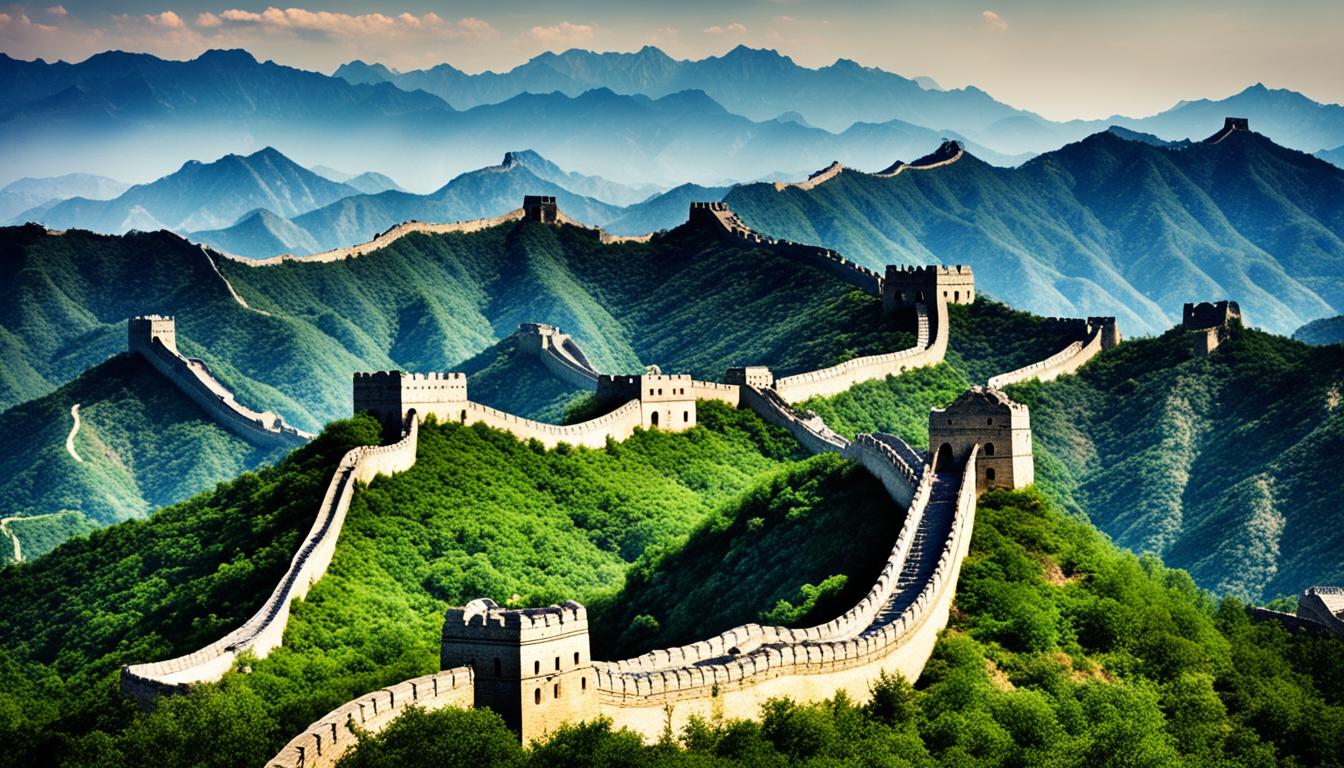
The Great Wall of China stands tall over the rugged northern terrain. It’s a symbol of Chinese ingenuity, determination, and cultural legacy. This iconic wall has grown over centuries, capturing the world’s imagination. It went from simple defensive structures to a UNESCO World Heritage Site.
We’ll explore the Great Wall’s origins, construction, and strategic importance. We’ll also look at its lasting cultural impact and natural beauty. This journey will show how the Great Wall has influenced Chinese history and global culture.
Cultural Wonders: The Grandeur of the Great Wall
The Great Wall of China is a symbol of Chinese architecture and spirit. It stretches for thousands of miles, built with rammed earth, stone, and brick. These materials helped it last through time and harsh weather.
This wall shows the smart planning of its builders. It’s a true wonder of ancient Chinese engineering.
A Marvel of Ancient Engineering
The Great Wall has watchtowers, garrison stations, and fortified passes. These features show the smart design of its creators. It was built to keep out invaders and also helped with communication, trade, and travel in the Chinese empire.
The way it was built and its huge size show the ancient Chinese skills in technology and organization.
Enduring Symbol of Chinese Resilience
The Great Wall has lasted for centuries, becoming a symbol of China’s strength. It has seen many invasions, natural disasters, and time’s effects. Yet, it still stands as a sign of the Chinese people’s will to protect their land and culture.
This iconic wall is a source of national pride. It shows the rich history and resilience of the Chinese people.
Origins and Construction: A Monumental Undertaking
The Great Wall of China started in the 7th century BCE. Back then, different Chinese history kingdoms built walls to keep out invaders. These walls were later joined and made bigger by the Qin, Han, and Ming dynasties.
Building the Great Wall of China was a huge job. It needed hundreds of thousands of workers, like soldiers, convicts, and peasants. They worked hard in tough conditions to make this ancient Chinese architecture wonder.
The project was massive, covering tough terrain and facing big challenges. These made the wall a top engineering achievement in history.
As Chinese history changed, the Great Wall was kept up, made bigger, and strengthened. It shows how the Chinese empire’s needs changed over time. From small walls to the big one we see now, the Great Wall shows the Chinese people’s creativity, hard work, and never-give-up attitude.
Architectural Ingenuity: Fortifications and Watchtowers
The Great Wall of China is a true marvel in architecture. It shows the advanced defensive skills of its creators. It’s not just one long wall but a complex system of watchtowers and stations. These were designed to keep invaders out.
Defensive Strategies of the Great Wall
The Wall’s path winds through the tough terrain, showing its smart design. It was built strong with stone, brick, and earth. This made it a tough challenge for invaders.
Watchtowers and beacon towers were key parts of the Wall. They let the Chinese watch their borders and act fast if needed. These towers were high up, giving sentries a great view.
These towers were more than just for watching. They were also places to send signals. Smoke and signals could be sent between them to share news and plan defenses.
Garrison stations were also part of the Wall’s defense. Soldiers and supplies were kept here to help defend the Wall. These stations were key in stopping invaders, showing the smart planning of the Wall’s builders.

The Great Wall’s design, from its path to its strong build and watchtowers, shows the smart ways the Chinese defended their land. This amazing work has lasted for centuries. It proves the creativity and toughness of its builders.
Strategic Importance: Protection from Invaders
The Great Wall of China was built to keep out invaders from the northern steppe. It was a barrier and a way to watch for threats. This made the Great Wall key to keeping the Chinese dynasties safe and stable.
The Great Wall had watchtowers, garrison stations, and roads for quick moves and messages. This helped in fighting off invaders fast.
The Chinese defensive strategy used the Great Wall showed ancient Chinese military planning. The Wall was big, strong, and had good ways to see and talk. This stopped many nomadic tribes from crossing the border.
The Great Wall of China was more than just a wall. It was a symbol of Chinese strength and unity. Building and keeping it up made the Chinese people proud. This made the Great Wall even more important for the Chinese military and people.
Dynasties and Expansions: A Ever-Evolving Structure
The Great Wall of China is more than just one wall. It’s a changing structure that has grown over centuries. Different dynasties in China have added to it. They made it stronger and longer to protect the empire.
Each dynasty added its own special touch to the Great Wall. This made the Wall a complex and interesting structure. The Qin dynasty started building the Wall, connecting and strengthening it. The Han and Jin dynasties then made it even stronger against invaders.
The Great Wall Throughout Chinese History
The Ming dynasty made the biggest changes to the Great Wall. They rebuilt and lengthened it a lot. The Ming-era Wall had advanced features like watchtowers and garrison stations. It was a top military structure in the world back then.
As China’s needs changed, so did the Great Wall. Each dynasty added its own unique features. This made the Wall a symbol of Chinese ingenuity and strength.
Mythical Tales and Legends: Folklore Surrounding the Wall
The Great Wall of China has always fascinated people worldwide. It’s not just its massive size and engineering that grab our attention. Over time, mythical tales and legendary stories have grown, creating a magical story around this famous landmark.
A famous legend tells of a heartbroken woman who, by Chinese myths, made the wall. Meng Jiangnu, a young woman, cried so much after her husband was forced to work on the wall. Her tears made a part of the wall fall down. This story shows the human cost of building the wall and has become a key part of its folklore.
Another myth tells of a celestial dragon guarding the wall. This dragon was said to keep invaders away and protect China’s people. It’s a symbol of the wall’s strength and the Chinese people’s resilience.
These stories add to the Great Wall’s mystique, making it more fascinating. The legends and folklore of the Great Wall have become a big part of its cultural heritage. They inspire awe and spark imagination in everyone who sees its grandeur.

Modern-Day Tourism and Preservation Efforts
The Great Wall of China is a top tourist spot, attracting millions yearly. Visitors come to see its beauty and learn about its history. The Wall winds through mountains and has well-kept towers, drawing people from all over. But, it faces challenges from too many visitors and environmental issues, leading to preservation efforts.
Exploring the Great Wall’s Enduring Legacy
These efforts aim to protect the Wall’s history and culture for the future. They help keep this ancient wonder inspiring and fascinating. By visiting, people learn about its importance in Chinese history and its role as a symbol of unity.
Visitors can hike the Wall, see its detailed design, and hear stories about it. This lets them understand its deep cultural significance. It shows how the Great Wall stands as a symbol of human creativity and hard work.
The Chinese government and international groups are working hard to save the Great Wall. Visitors can help by being careful, respecting the site, and supporting eco-friendly tourism. This way, the Great Wall can continue to amaze and motivate people, keeping its place as a global icon.
Cultural Impact: A Unifying Force for China
The Great Wall of China is more than just a structure. It has deeply influenced Chinese cultural heritage and national identity. This symbol of history brings together diverse regions and ethnic groups in modern China.
This wall has grown beyond its original purpose. It now symbolizes the resilience, innovation, and unity of the Chinese people. It’s a cultural icon that strengthens a shared sense of belonging and identity among Chinese people.
Throughout China’s history, the Great Wall has shown the nation’s strength and unity. Its construction over centuries by many people is a source of pride. It reflects the Chinese people’s determination and creativity.
Today, the Great Wall of China cultural impact goes beyond its physical form. It inspires artists, writers, and scholars with its grandeur. The Wall’s image is known globally, symbolizing China’s deep cultural roots and the spirit of its people.
Natural Wonders Along the Great Wall’s Path
The Great Wall of China is not just a wonder of architecture. It also goes through some of China’s most stunning natural landscapes. It crosses mountains, valleys, and deserts, giving visitors a chance to see the country’s diverse geography. From the high, snowy peaks of the Himalayas to the green forests of the east, the Wall shows off China’s vast and beautiful natural landscapes.
Walking along the Wall lets you see how human creation meets nature. The Wall blends well with the natural environment. This shows the smart thinking and respect of its builders. They knew how important China’s varied landscapes were.
Seeing the dramatic cliffs and deep valleys the Wall goes through is amazing. Or, you can enjoy the calm forests and meadows around it. The natural beauty along the Great Wall’s path is unforgettable. This famous structure is more than a symbol of Chinese strength and smart thinking. It’s also a way to see China’s stunning natural beauty.