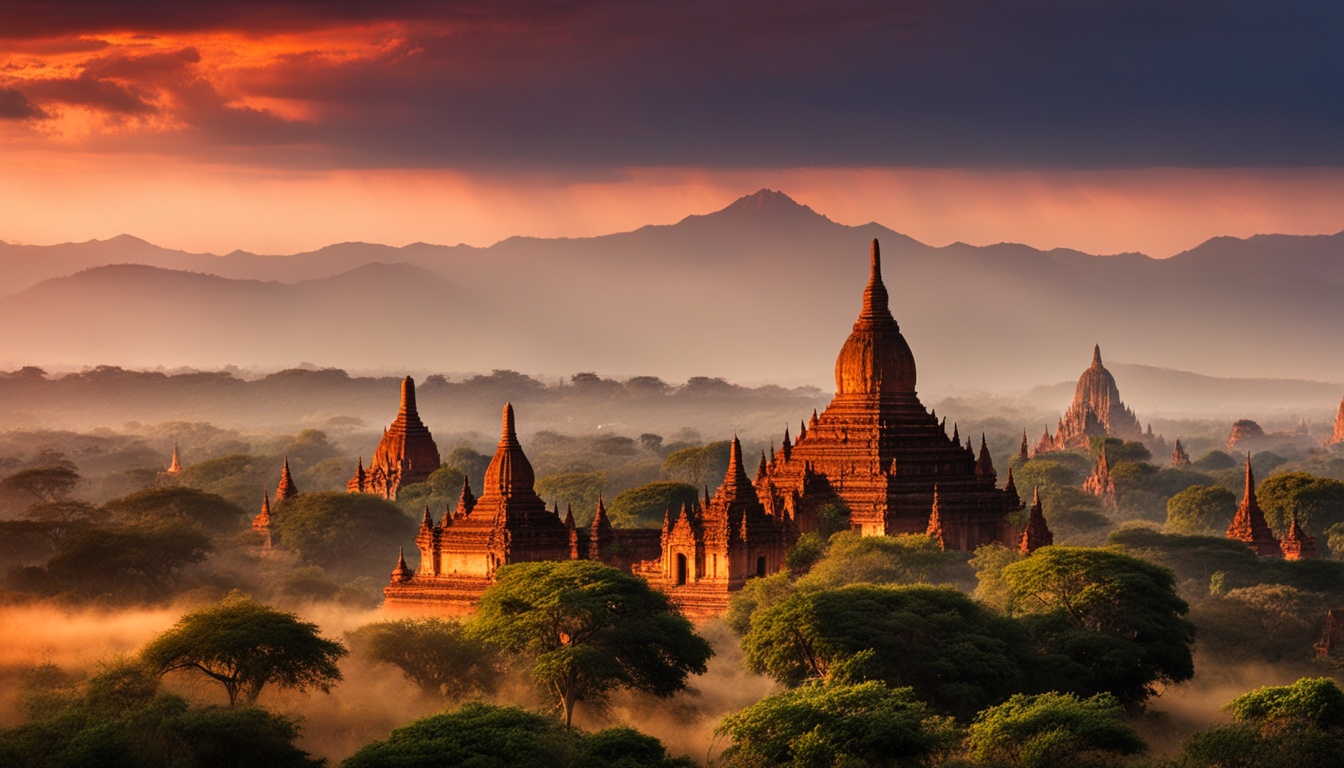
Bagan is an ancient city in Myanmar, known for its stunning landscape filled with thousands of temples and pagodas. It’s a UNESCO World Heritage Site that lets visitors dive into Myanmar’s rich history and architecture. This makes it a top spot for those who love exploring Southeast Asia’s cultural wonders.
The temples of Bagan show off the creativity and skill of the Bagan people. They feature tall spires and detailed brick carvings. Each temple is different, offering a peek into the city’s deep cultural roots.
Bagan: An Ancient City of Myanmar
Bagan sits by the Irrawaddy River and has always drawn in travelers and historians. It was the old capital of the Bagan Empire, ruling much of today’s Myanmar from the 9th to 13th centuries. It’s known for its deep history and cultural importance.
Unveiling the Rich History of Bagan
Bagan’s story goes back to the 2nd century CE, with many small kingdoms around. King Anawrahta in the 11th century made Bagan great. He built thousands of temples, pagodas, and monasteries. These buildings have lasted for centuries, making Bagan famous as an archaeological site and ancient city.
Exploring the Cultural Significance of Bagan
The culture of Bagan is deeply tied to its religious past. Buddhism shaped the city, with its leaders and people building many sacred places. Now, Bagan’s history and culture still amaze visitors, showing the lasting effects of its religious and architectural traditions.
The Architectural Marvels of Bagan
The temples and pagodas of Bagan are famous for their amazing architecture and detailed brick work. Builders used millions of hand-made bricks to make the tall structures that cover the land. These brick temples show many different styles, from fancy to simple. Each one shows the skill and art of the Bagan craftsmen who built them.
Intricate Brick Masonry and Artistry
The Bagan architecture shows how skilled the builders were. They made each brick by hand and put them together to make huge structures that last. The brick temples have amazing patterns and designs on the outside and inside. They are not just places of worship but also show the Bagan artistry that has amazed people for years.
The different styles of Bagan architecture show the changing art and culture of the city. From fancy to simple, each temple and pagoda gives a peek into the history and creativity of the Bagan people.
Cultural Wonders: Temples of Bagan
Bagan, an ancient city in Myanmar, is filled with temples that show off the area’s rich culture. These temples are a mix of architectural, religious, and artistic wonders. They draw people from all over the world. The Shwesandaw Pagoda’s tall spires and the Sulamani Temple’s detailed carvings show the creativity and faith of the Bagan people.
The Bagan temples are more than just old buildings; they are a link to Myanmar’s history and culture. They let visitors feel the connection between the past and today. These sites are a bridge between the spiritual and everyday life, inviting people to dive into Bagan’s lasting culture.
When you see the Bagan temples, you’ll be amazed by their size and beauty. The big stupas, fancy facades, and detailed carvings show the hard work and dream of the Bagan builders. They wanted to make structures that would last forever and make people feel awe.

The Bagan temples are also full of Myanmar’s spiritual and artistic history. Their walls have bright murals and beautiful stone carvings. Each one shows the talent of the Bagan artists. These sites let visitors see the detailed world of Bagan’s art and religion, showing the deep meanings and symbols.
Ananda Temple: A Masterpiece of Bagan
In the heart of Bagan, the Ananda Temple shines as a stunning work of art. It draws in visitors with its unique Bagan temple and Buddhist architecture. Built in the early 11th century, this famous spot is known for its detailed design. It has four big entrances with golden stupas that sparkle.
Unveiling the Architectural Splendor
When you get close to the Ananda Temple, its beauty takes your breath away. Its design is perfectly balanced, creating a peaceful vibe. The walls are covered in beautiful stone carvings and frescoes. These show off the artistic skills of the Bagan era.
Inside, the temple is just as amazing. It has a big room with four huge Buddha statues, each looking out in a different direction. The light coming through the windows and doors makes the place feel deeply spiritual. This makes the Ananda Temple a true gem of Bagan’s culture.
If you love Buddhist teachings or just admire great architecture, you must see the Ananda Temple. Its beauty and importance still move and inspire everyone who sees it. It’s a key spot in Bagan, known for its incredible architecture and cultural value.
Shwesandaw Pagoda: A Towering Monument
The Shwesandaw Pagoda rises high over the Bagan plains, standing out as a key landmark. Built in the 6th century, it’s a top example of Bagan’s unique religious architecture. Its design, with receding terraces, shows the path to enlightenment.
The pagoda’s golden stupa is a sight to behold, visible from afar. Climbing to the top offers amazing views of the Bagan plains. It lets visitors feel the spiritual and cultural depth of this ancient site.
As one of the oldest and most sacred Bagan Buddhist monuments, the Shwesandaw Pagoda shows the region’s deep history and faith. Its detailed brick work and art highlight the ancient Bagan architects’ skills.
Now, the Shwesandaw Pagoda is a favorite spot for pilgrims and tourists. It gives a peek into the remarkable Bagan religious architecture that has lasted through the ages. Its tall presence reminds us of Bagan’s lasting legacy, the strength of faith, and the Burmese people’s spirit.
Dhammayangyi Temple: A Colossal Edifice
In the heart of Bagan, the Dhammayangyi Temple shines as a masterpiece of old. It shows off the area’s deep cultural and religious roots. Built in the 12th century by King Narathu, it’s a prime example of Bagan’s temple style and the era’s grandeur.
Exploring the Grandeur and Symbolism
When you enter the Dhammayangyi Temple, its huge size and fine details hit you right away. The temple’s walls are huge, made with advanced methods. They show power and respect. Every carving and design has a special meaning.
The design of the Dhammayangyi Temple reflects deep spiritual beliefs and the skill of its builders. Inside, you’ll find big spaces filled with detailed carvings. These show the Bagan culture’s deep religious symbols and faith.
The temple’s huge size and strong look show the big effort and resources put into it. It’s one of Bagan’s biggest buildings. The Dhammayangyi Temple is a true work of art, showing Bagan’s architectural beauty and lasting cultural value.

Sulamani Temple: A Gem of Bagan
In the heart of Bagan, the Sulamani Temple shines as a masterpiece of art. Built in the 12th century, it’s famous for its detailed stone carvings. These carvings show the skill of the Bagan people and their Buddhist stories and daily life.
When you see the Sulamani Temple, its size and beauty grab your attention. Its design is unique, drawing you in to explore more. The carvings outside are amazing, showing scenes from Buddhist stories and Bagan’s culture.
Unveiling the Intricate Stone Carvings
Inside the Sulamani Temple, you’ll find more stunning Bagan carvings. The walls are filled with detailed sculptures. They show Buddhist figures, gods, and everyday life, all in beautiful stone.
The carvings are not just pretty. They tell stories of the Bagan people’s culture and beliefs. Each sculpture has its own story, taking you back in time. If you love art, history, or ancient beauty, you must see the Sulamani Temple.
Thatbyinnyu Temple: A Towering Masterpiece
Bagan, Myanmar’s ancient city, is famous for its stunning architecture. The Thatbyinnyu Temple is a key highlight. Built in the 12th century, it shows the skill of Bagan’s architects.
The temple stands tall and beautiful. It mixes Bagan and Indian styles in a unique way. Visitors love its stone carvings on the terraces and facades. These show the amazing detail and art that has lasted for centuries.
Inside, the temple feels peaceful and thoughtful. It’s designed for deep reflection. The temple honors Bagan’s culture and religion. It’s a place where you can really feel the history and beauty of Bagan.
The Thatbyinnyu Temple is a true work of art. It shows the lasting beauty of Bagan’s architecture and religion. It inspires and amazes everyone who visits.
Exploring the Lacquer Artworks of Bagan
Bagan, an ancient city in Myanmar, is famous for its stunning temples and lacquer artworks. For years, local artisans have perfected their craft. They make beautiful lacquerware that highlights Bagan’s cultural heritage.
When you visit Bagan, you can dive into the world of lacquer art. You’ll see workshops and galleries full of these amazing pieces. They include decorative items and religious artifacts, each showing the skill and tradition of Bagan’s artisans.
A Glimpse into the Creative Genius
The making of Bagan’s lacquerware shows the area’s artistic talent. Artisans start with the sap of the thitsi tree for the lacquer base. They layer, dry, and polish the pieces to make them look amazing.
In the workshops, you can see the artisans’ hard work and skill. They carve, paint, and decorate each piece with care. This lets visitors appreciate Bagan’s crafts and culture more deeply.
The lacquer art of Bagan combines detailed work, bright colors, and deep cultural meaning. Visitors to this ancient city learn about the artisans and the lasting impact of Bagan’s culture.
Preserving the Cultural Legacy of Bagan
Bagan, a UNESCO World Heritage Site, is at the center of efforts to protect its vast cultural legacy. Local and international groups work hard to save the ancient temples and pagodas from weather, natural disasters, and tourism. They use conservation programs, education, and sustainable tourism to keep Bagan’s cultural wonders for future generations.
The UNESCO World Heritage Site status helps lead these preservation efforts. It brings resources and global attention to the site. Conservation teams use special techniques to fix and keep up the temples’ brick masonry, stone carvings, and artworks. These efforts protect the physical sites and the cultural traditions that have lasted for centuries.
For Bagan cultural preservation, promoting Bagan sustainable tourism is key. Local authorities and groups encourage visitors to explore responsibly. This helps balance economic growth with protecting Bagan’s heritage. Visitors can help by supporting responsible tourism, connecting with local artisans, and pushing for Bagan’s preservation.