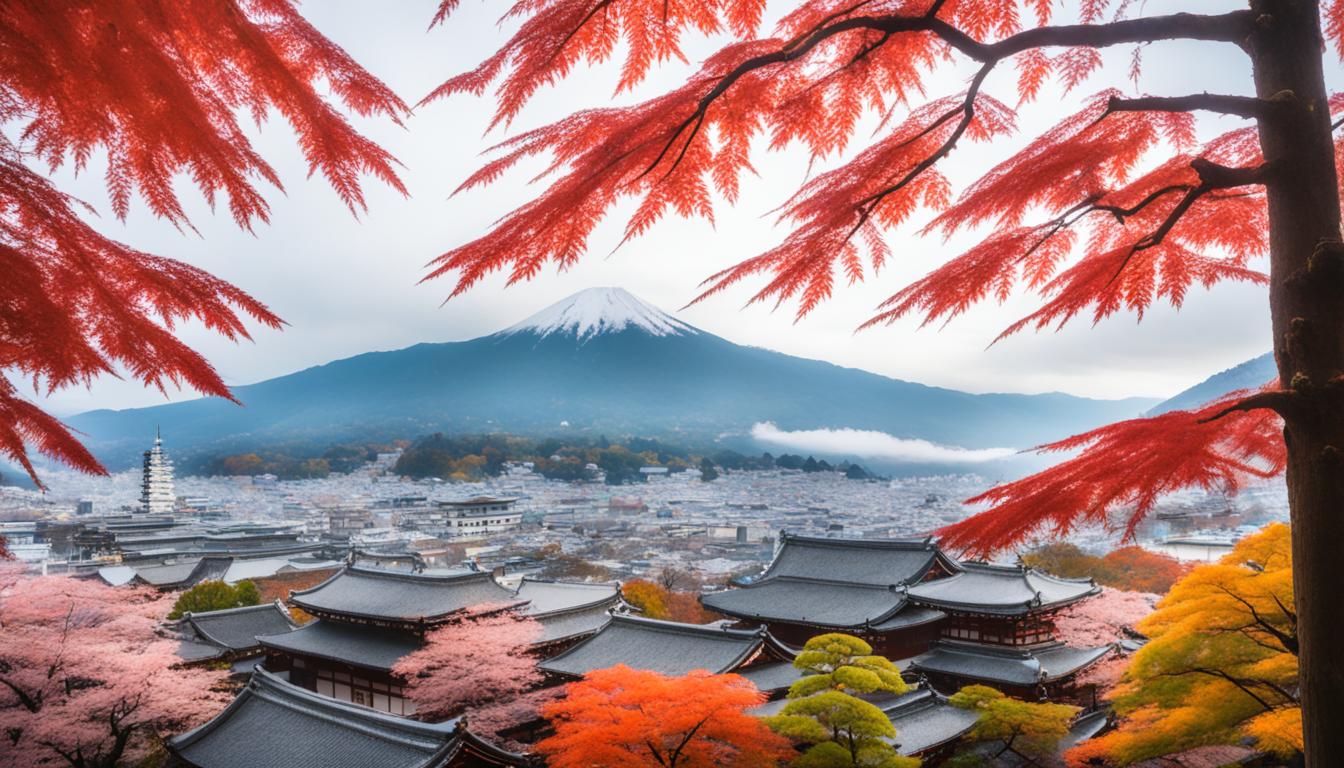
Kyoto, Japan’s former imperial capital, is a city that mixes old traditions with new developments. As you walk through its historic streets, you’ll see many Kyoto cultural wonders. You’ll find everything from peaceful temples and shrines to beautiful geisha districts and quiet gardens.
This city shows you Japan’s rich past and its modern side. It’s a place where history and today meet.
This article will show you the top sights and experiences in Kyoto. Get ready for a trip that takes you deep into Kyoto’s heritage. You’ll see why this city is so special.
Captivating Kyoto: A Gateway to Japan’s Illustrious Past
Kyoto was the capital of Japan for over a thousand years, making it a cultural gem. It was the center of art, politics, and religion. The city is filled with temples, shrines, and palaces that show Japan’s rich history.
As the Imperial Court’s seat, Kyoto was a place of cultural growth. It was where Japan’s traditions and skills shone.
Now, Kyoto’s old buildings and festivals still amaze people from all over the world. They offer a peek into Japan’s history. The Golden Pavilion and the Fushimi Inari-Taisha’s red gates are just a few examples of Kyoto’s heritage.
Visiting Kyoto’s sites lets travelers dive into Japan’s history. They can walk through old townhouses or see the skill of local artisans. This way, visitors can feel Kyoto’s timeless beauty and learn about Japan’s history.
Strolling the Iconic Gion District: Where Geisha Culture Thrives
In the heart of Kyoto, the Gion district is a gateway to Japan’s rich history. Walking through its narrow streets, you’ll see traditional machiya townhouses. This takes you back to a time when geisha culture was alive and well.
Unveiling the Mystique of Geisha Traditions
Geisha are known for their skills in dance, music, and conversation. Seeing a geisha in the Gion district is magical. It shows the long-standing traditions of Kyoto.
Exploring the Enchanting Preserved Machiya Townhouses
In the Gion district, you’ll see many preserved machiya, traditional wooden houses. These buildings connect us to Kyoto’s history. They let us see the skill in building that Kyoto is famous for.
The Gion district has geisha performances and preserved machiya townhouses. It’s a mix of Kyoto’s old and new. Visitors can dive into the city’s enduring beauty.
The Serene Paths of the Philosopher’s Walk
In the north of Kyoto, the Philosopher’s Walk is a peaceful escape from the city’s noise. It’s named after Kitaro Nishida, a famous philosopher who meditated here. This path lets visitors enjoy Kyoto’s natural beauty.
Walking here, you’ll see a calm canal and beautiful cherry blossom trees. It’s a quiet place to escape the city and enjoy nature.
Locals and visitors love the Philosopher’s Walk for its deep connection to Kyoto’s culture. It’s perfect for finding peace or just enjoying nature’s beauty.
Walking here, you’ll feel the calm of Kyoto’s landscapes. It shows why Kyoto is important for culture and spirituality. This trail is a top spot for experiencing Kyoto’s timeless beauty.
Cultural Wonders: Discovering Kyoto’s Famed Temples and Shrines
Kyoto is the cultural heart of Japan, known for its stunning temples and shrines. These places offer a peek into Japan’s rich history. The Kinkaku-ji Golden Pavilion and the Fushimi Inari-Taisha shrine are famous spots that attract visitors from all over.
Kinkaku-ji: The Golden Pavilion’s Shimmering Beauty
The Kinkaku-ji, or Golden Pavilion, is a top attraction in Kyoto. It’s a Zen temple surrounded by a peaceful pond and beautiful gardens. The top two floors shine with gold leaf, reflecting in the water below.
Visitors are often amazed by the temple’s beauty and the calm Zen feeling there.
Fushimi Inari-Taisha: A Mesmerizing Trail of Torii Gates
The Fushimi Inari-Taisha shrine is another famous spot in Kyoto. It’s the main shrine for Inari, the Shinto god of rice. The shrine has a long trail of bright orange torii gates up a mountain.
As you walk up, you’re surrounded by these beautiful gates. It’s a truly magical experience.

Kyoto’s Kyoto temples and shrines connect you to Japan’s history and spiritual traditions. The Kinkaku-ji Golden Pavilion and the Fushimi Inari-Taisha shrine are must-sees in Kyoto.
Nijo Castle: A Glimpse into Feudal Japan’s Grandeur
In the heart of Kyoto, Nijo Castle stands as a symbol of Japan’s feudal past. Built in 1603, it was the home of the Tokugawa shoguns who ruled for over 250 years. Walking through the castle, you step back into the world of Kyoto’s feudal history.
The castle is a masterpiece of Japanese architecture from the Edo period. Its ornate gates show the shoguns’ wealth and power. Inside, the “nightingale floors” squeak with every step, alerting guards to intruders.
Visiting the castle grounds feels like stepping back in time. You can imagine the power and luxury of the Tokugawa shogunate. The interiors are filled with beautiful paintings and woodcarvings, showing the shoguns’ lavish lifestyle.
Nijo Castle is a key place for learning about Kyoto’s history. It’s a must-see for anyone wanting to explore the city’s rich past.
Immersing in the Tranquility of Japanese Gardens
Kyoto is known as Japan’s cultural heart, famous for its peaceful Japanese gardens. These green spaces offer a quiet escape from the city’s noise. They let visitors enjoy the beauty of Zen-inspired landscapes. The Ginkaku-ji garden, or the Temple of the Silver Pavilion, is a top spot.
The Ginkaku-ji temple garden sits at the foot of the Higashiyama mountains. It’s a true Kyoto gem. The garden follows Zen Buddhism’s principles, making it peaceful and thought-provoking. You’ll see a “Sea of Silver Sand” and a moss-covered hill, each designed to bring calm.
The Zen-inspired Landscapes of Ginkaku-ji
Walking through the garden, you’ll see how nature and architecture blend perfectly. The pond’s calm waters mirror the Silver Pavilion, showing nature and human skill working together. Trees and moss-covered stones add to the peaceful feel, encouraging visitors to pause and appreciate the beauty around them.

Visiting the Ginkaku-ji garden is a chance to experience timeless beauty. It’s perfect for those looking for peace or a break from the city. These Kyoto gardens offer a unique experience, showing how nature and humans can live together in harmony.
Embracing Kyoto’s Culinary Delights: A Taste of Tradition
Kyoto’s rich culture shines through its amazing food, shaped by centuries of fine cooking traditions. You can enjoy the delicate kaiseki meals and the famous Kyo-ryori dishes. These dishes let you taste Japan’s food heritage in a unique way.
The key to Kyoto’s food is the care for every detail, using seasonal ingredients, and balancing flavors. Chefs in Kyoto have mastered the art of making each dish a feast for both the taste and the eyes. Whether it’s a traditional Kyo-ryori feast or a kaiseki course, dining here shows Kyoto’s deep love for its food.
Exploring Kyoto’s food is like going on a journey through its culture. Every flavor and presentation of Kyo-ryori and kaiseki tells a story of Kyoto’s dedication to its food traditions. By enjoying these flavors, visitors can understand more about Kyoto’s art, history, and soul.
Shopping for Kyoto’s Unique Crafts and Souvenirs
Kyoto is a place full of traditional crafts, letting visitors see the city’s rich artistic past. As you walk through Kyoto’s shopping areas, you’ll find many unique, handcrafted items. These items show the skill and creativity of local artisans.
Discovering the Art of Kyoto’s Traditional Craftsmanship
Kyoto is known for its delicate ceramics, intricate textiles, and beautiful lacquerware. You can find everything from unique pottery to stunning kimonos and bamboo accessories. Each item shows Kyoto’s deep commitment to traditional skills.
Visit the lively local markets to meet the artisans and learn about their work. You can see Japanese calligraphy, admire Kyo-Yaki ceramics, or learn about Nishijin textiles. Every purchase is a way to support Kyoto’s traditional crafts.